
A 100-Day Bone Marrow Transplant Recovery Timeline Guide
Bone marrow transplant recovery is a gradual process that requires careful monitoring, especially during the first 100 days after transplantation. This guide explains the bone marrow transplant recovery timeline, covering key stages from stem cell infusion and engraftment to early, intermediate, and long-term recovery. It also highlights common challenges, essential post-transplant precautions, dietary recommendations, follow-up tests, and warning signs that require urgent medical attention. Patients and caregivers will learn practical ways to support recovery, reduce infection risks, manage nutrition, and monitor health changes. Understanding each phase of BMT recovery can help patients follow medical guidance confidently and progress safely toward returning to everyday life.
Going through the surgical transplant is not the execution of the treatment but only the beginning. After the completion of the surgery comes the bone marrow transplant recovery timeline, where the patient’s real challenge begins. The first 100 days post-transplant are bifurcated into various phases. Beginning with engraftment and concluding with long-term recovery, detailing each phase, its threats, and achievements.
Read this guide till the end to learn about the challenges and precautions to consider during the recovery time after a bone marrow transplant, along with how to tackle them structurally to navigate BMT 100-day recovery care.
Recovery Time After Bone Marrow Transplant
A very common question, “How long would it take until life starts to feel normal again?” arises among many patients post-transplant.
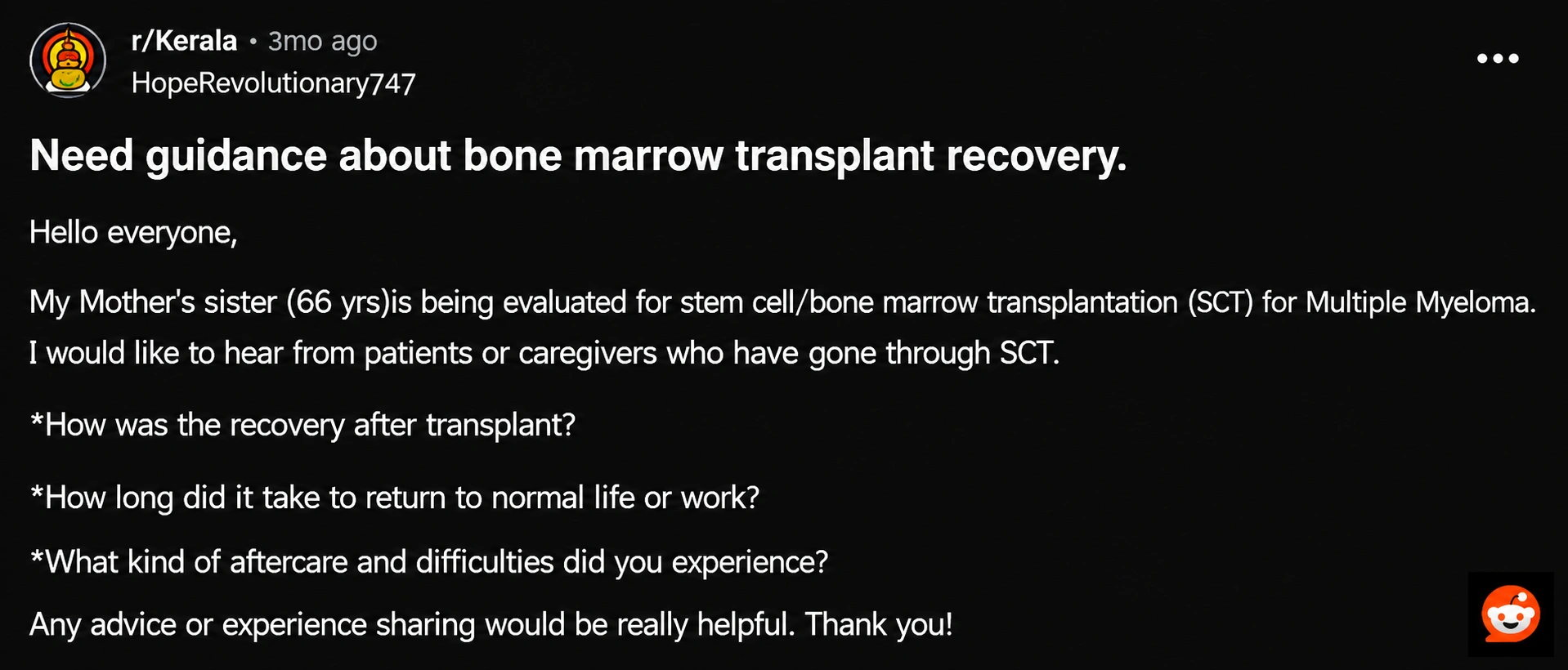
Recently, a user has shared their concerns regarding the bone marrow transplant healing process. A familiar situation that almost all patients go through. In order to address situations like this, it is crucial to take every step with utmost care. Consider post-stem cell transplant precautions to get through it quickly.
Adapting Isolation for Bone Marrow Transplant Recovery Timeline
The initial post-transplant phase is also a raw period for the body to function properly. This is because the patient’s body ignores everyday microorganisms, which helps a healthy body to fight off mild viruses, fever, cold, cough, and mold spores, resulting in dangerous infections.
That is why the foremost measure to take during the bone marrow transplant recovery process is to keep the patient in a strictly isolated, sanitized, and filtered air environment. Along with restricting physical contact from any external visitors except the medical team while the new graft matures, among other components essential for a healthy body.
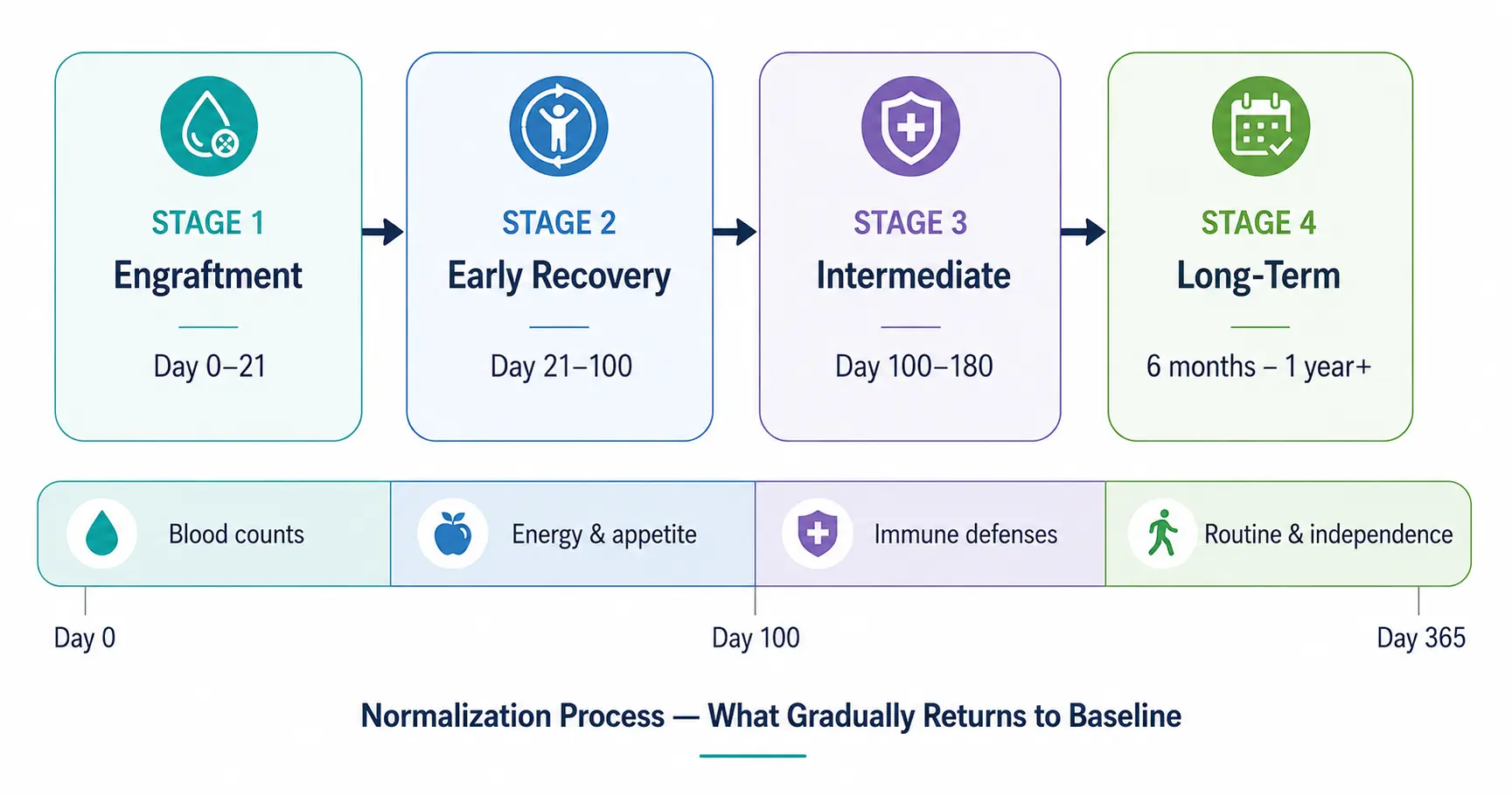
Stages of Bone Marrow Transplant Recovery Care Process
|
Recovery Stage |
Expected Outcomes |
|
Stem Cell Infusion |
The infusion takes effect in an isolated environment |
|
Engraftment |
The beginning of new stem cell production with a higher risk of catching an infection during this time, as ANC reaches above 500. |
|
Early Recovery |
Discharged from the hospital with a delicate immune system. A core BMT 100-day recovery care is required |
|
Intermediate Recovery |
Immunity begins to get backed up with the body’s defenses, with GvHD, diet, and activity being monitored closely |
|
Long-Term Recovery |
Close to having a healthy immune body, followed by regular checkups, re-vaccination, and return to doing daily tasks. |
Check out the Challenges Faced During Recovery Time After Bone Marrow Transplant
One important BMT caregiver tips to keep in mind is that the recovery period is never linear. The immense amount of chemotherapy and radiation entirely demolishes the malignant cells, along with temporarily breaking down the body’s defences.
The following are some of the symptoms patients and caregivers should not take for granted:
-
Poor management of nutrition in the body due to loss of appetite and taste changes.
-
Weakness and fatigue, taking several weeks to properly recover.
-
High risk of infections building up in the patient’s system due to a vulnerable body caused by heavy loss of white blood cells.
-
Experiencing mood swings such as chemo brain, severe anxiety, suffocation, and isolation fatigue.
-
Having the after-effects of heavy strain on the heart, kidney, and liver due to a high dosage of medication taken during the BMT treatment.
-
Inability to adopt Graft-versus-host disease in allogeneic transplant prevention.
Vital Post-Stem Cell Transplant Precautions Everyone Must Know
Among BMT caregiver tips, taking precautions for granted can result in hindering the patient’s entire normalisation journey at any point. To remove such chances, taking worst-case scenarios into consideration not only keeps a consistent recovery time after a bone marrow transplant but also motivates patients to adopt such habits as a part of their daily life.
-
Wash hands and sanitize touch surfaces areas regulary with medical wipes.
-
Keep all doors and windows closed if residing in polluted areas.
-
Evade from going close to freshly cut flowers, grass, soil, or indoor plants.
-
Ensure to take all prescribed medications along with anti-infectives without delay.
-
Monitor early symptoms of graft-versus-host disease, such as jaundice, rash, or diarrhea.
-
Go with non-alcoholic mouthwashes and a toothbrush with soft bristles to avoid any oral infection.
-
Wear an N95 without in during outdoors, along with limiting visitors.
-
Keep up a daily track record consisting of weight, body temperature, fluid intake, medication, and urine output.
BMT Caregiver Tips: What to Eat & What Not to Eat?
Following a strict bone marrow transplant diet helps safeguard the patient’s digestive system from unwelcome pathogens. This guarantees that an appropriate amount of protein and other nutrients is included for proper repair of the body’s tissues.
Among the diverse food categories, the following are some of the groups to categorize as what to eat and what definitely not to eat:
What to Eat
|
Safe Food Groups |
Types of Food |
|
Protein & Meat |
Cooked meats, fish, poultry, eggs with firm yolks, and tofu. |
|
Dairy |
Yogurt, milk, butter, and cheese with limited portions |
|
Fluids |
Boiled, bottled, and filtered water. |
|
Starch & Grains |
All types of pasta, breads, baked food in sealed containers, and cooked grains |
|
Fruits & Vegetables |
Cooked and boiled veggies, fruits - Avocados, bananas, oranges with thick skins. Needs to be properly washed and peeled. |
What Not to Eat
|
Risky Food Groups |
Types of Food |
|
Raw Proteins |
Half-cooked or raw meats, shellfish, sushi, or eggs that are soft-boiled |
|
Undercooked Produce |
Leafy salads, raw sprouts, fresh berries, skin-on or raw fruits |
|
Unprocessed Products |
Cold-pressed honey, milk, cheese like brie, blue cheese, and camembert |
|
Leftover Food |
Food kept in the refrigerator for more than 24 hours is not advised to be eaten by a patient with weak immunity |
|
Food from Stalls or Deli |
Salad from salad bars, hot dogs, cold deli meats, food from buffets, and open food bins |
Follow-Up Tests to Take During the Bone Marrow Transplant Recovery Process
While in a BMT 100-day recovery care period, regular visit or, reports, and tests are essential to track ongoing recovery and adjust the dosage of current medications.
-
Complete Blood Count (CBC) to be done 2-4 times a week to track platelet recovery, white blood cell count, and hemoglobin levels.
-
Cyclosporine Trough Levels to check the accuracy of the blood tests taken for allogeneic transplant recipients to confirm the drug remains in a narrow range for graft-versus-host disease prevention.
-
A Comprehensive Metabolic Panel (CMP) for creatinine, liver enzymes, blood urea nitrogen (BUN), and bilirubin to assess toxic levels and organ functionality.
-
Viral PCR Surveillance for verifying latent viral reactivations, also involving Epstein-Barr Virus (EBV), Cytomegalovirus, and BK virus.
-
Bone Marrow Biopsy intervally to ensure engraftment.
-
Plan for vaccination after 6-12 months post-transplant surgery.
Warning Signs for Urgent Medical Attention
Patients and caregivers must contact their health advisors or visit the hospital without any hesitation if the following signs seem to be visible:
-
Shaking uncontrollably, feeling chills, or rigorously shivering.
-
Body temperature going above 38.0 Degrees (100 F) or having a mild fever for days.
-
Unexpected nosebleeds, blood in gums, stool, urine, and abrupt bruises.
-
Having GVHD symptoms like watery diarrhea, yellow eyes and skin, nausea, or abdominal pain
-
Neurological symptoms like headaches, confusion, dizziness, or unsteadiness while walking.
Path to Normalization During Bone Marrow Transplant Healing Time
The journey of going back to a normal life is not as easy as it looks. It is essential to follow a thoroughly built roadmap without skipping any regimen. Between the third and sixth week, plenty of patients start to show an unexpected shift. Their blood count steadies, energy comes back in fragments at a slow pace, white blood cells begin to regenerate, immunity and appetite become healthier, and going back to daily habits feels normal.
Also Read: How to Choose the Best BMT Hospital in India: A Checklist
To Conclude
Both patients and caregivers are strongly advised not to rush the process, as the Bone Marrow Transplant healing time is not a sprint but a structured marathon. Not only does it require extreme attention to detail in the first 100 days. But a high amount of patience and resilience. This means patients are required to follow post-stem cell transplant precautions, along with a healthy diet, getting proper rest, and following the measures without skipping or jumping to the execution of the normalization process.
Frequently Asked Questions
1Which phase is considered the worst during the bone marrow transplant recovery process?
The most challenging time post-transplant procedure is the first 10-20 days, during which the patient’s immune system is completely shattered due to high-dose medications that take a heavy toll on their mind and body.
2What needs to be avoided after the surgery?
Things that strictly need to be avoided are raw food, smoking, alcohol, direct human contact, polluted areas, taking painkiller medicines without consulting a doctor, and going near freshly cut garden plants.
3How long does it take to return to a normal life?
The bone marrow transplant recovery timeline varies on the type of surgery you had. For transplants like an autologous transplant, it takes roughly 6 months to 1 year for complete recovery. Whereas, for an allogeneic surgery, it takes 1 to 2 years. However, for both surgeries, the first 100 days are the most essential period for tracking the patient’s health.
4Can one live a healthy life after the bone marrow transplant surgery?
Absolutely! Many people lead a very healthy and long life after the surgery. The patient needs to have a clean slate for the first five years without having any relapse of illness. Once the period is completed with a healthy immune system, there is a high chance for them to live 10-15 years more.
5Maximum how many times can one have a bone marrow transplant surgery?
A person can, on average, have a maximum of 2 bone marrow transplants. Very rarely, 3 times, if the original illness returns, since persistent chemotherapy and high doses of medication and radiation weaken the body adversely.